
Background: The piece is authored by Sajid and Israr, based on a scoping field visit undertaken for 'CARE' — Co-developing a sexual and reproductive health and rights (SRHR) framework with climate-affected adolescents in Bangladesh to inform Southern-led policy, practice, and curricula — funded by the Academy of Medical Sciences in partnership with the Liverpool School of Tropical Medicine and BRAC James P. Grant School of Public Health, BRAC University.
In keeping with the ethical standards of the project, the authors have adhered to rigorous guidelines as mandated by internal ethical review boards. All participants have provided verbal consent prior to the documentation of their stories and photographs and the participants have been kept anonymous through the use of pseudonyms.
Staring blankly into the distance, two young men show us their hands, covered in painful lesions and rashes from constant exposure to saltwater. The young men have been friends since childhood and are from the local Munda community. They are aged 21 and 23 respectively and have been working as crab cultivators since they were teenagers.
"There is nothing to be done and no one to complain to about this. The salt is part of our bodies just as it is part of life. The salt has spread everywhere," 21-year-old Rony sighs.
Deep in Bangladesh's southwestern coast, near what remains of the Sundarbans mangrove forest, climate change has transformed the landscape. The rivers have shifted alongside the populations, livelihoods have changed, and emerging crises always seem to be on the horizon. We recently visited Shyamnagar, Satkhira as part of fieldwork for a project which aims to center the voices and intersectional experiences of adolescents from climate-displaced communities in urban and peri-urban areas of Bangladesh. The work feeds into creating a Southern-led conceptual framework to understand the sexual and reproductive health needs of climate-affected populations and to gain a deep understanding of the lived experiences of people in climate-vulnerable areas.
Salinity, Survival, and Shifting Ways of Life
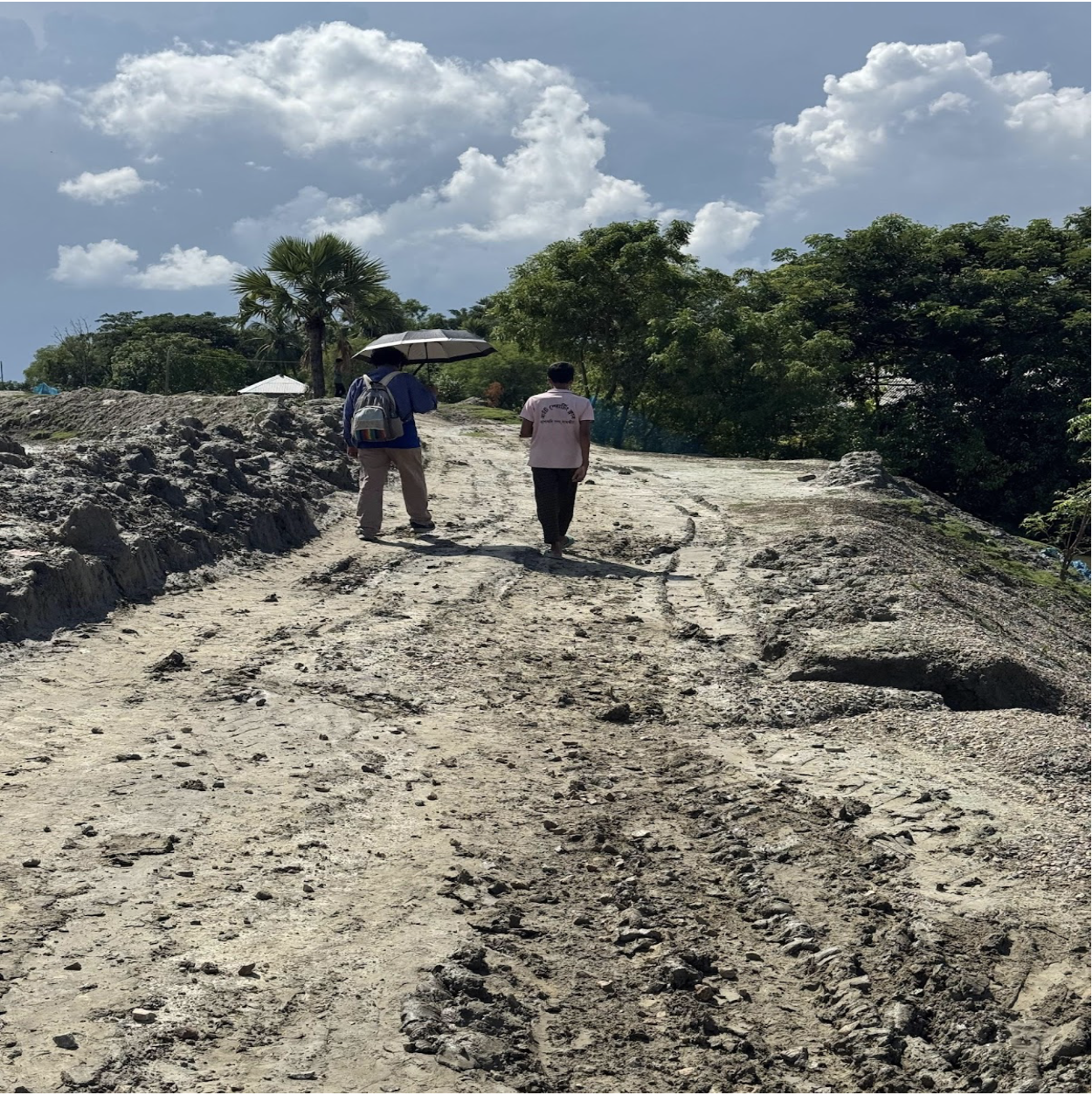
The road to Shyamnagar stretches endlessly from its starting point in central Satkhira. A brisk two-hour drive punctuated by tortuous bumps, tugging at the edges of a thin piece of land embedded in a huge body of water—it offers a window to a world far from the concrete cacophony of Dhaka's chaotic sprawl.
With the help of a local NGO worker, the team navigated a huge labyrinth of waterlogged land. During a further two-kilometer walk to the homes of affected populations, it was common to see both young and middle-aged men standing on silted structures trying to set up "ghers" (fish farms) to catch small crabs.
Our guide led us to the farthest corners of the Burigoalini Union in Shyamnagar, to an area named Mundapara. The Mundas represent a part of Bangladesh often invisible to the mainstream: they are non-Muslim, non-Bengali, and have a history rooted in their arrival from Jharkhand more than half a century ago. Historical marginalization has left many Mundas without access to formal education, compounding their vulnerability in an already precarious environment.
A 17-year-old adolescent, Robi, was having rice and thin lentils with no fish or meat when we first approached him during lunchtime. "We rarely eat the crab that we harvest because we would rather sell it for money," he remarked. When asked about fish, considering many Mundas had been fishermen, he replied grimly that the "fish have died” attributed to rising salinity, coastal flooding, and erratic bouts of rainfall.
The move from agriculture to fisheries now feels inevitable, as 62% of coastal land is now affected by varying degrees of salinity. What was once seen as a rich, fertile land has turned into a nightmare for many of the families who find the land impossible to farm due to the increasing salinity in the water. Now, with the area beset by increased salinity leading to the gradual extinction of fish: fishermen, NGOs and local governments all consider crab farming as a better source of livelihood, generating about 35 million dollars in the 2019-2020 fiscal year.
Survival Between Displacement and Migration
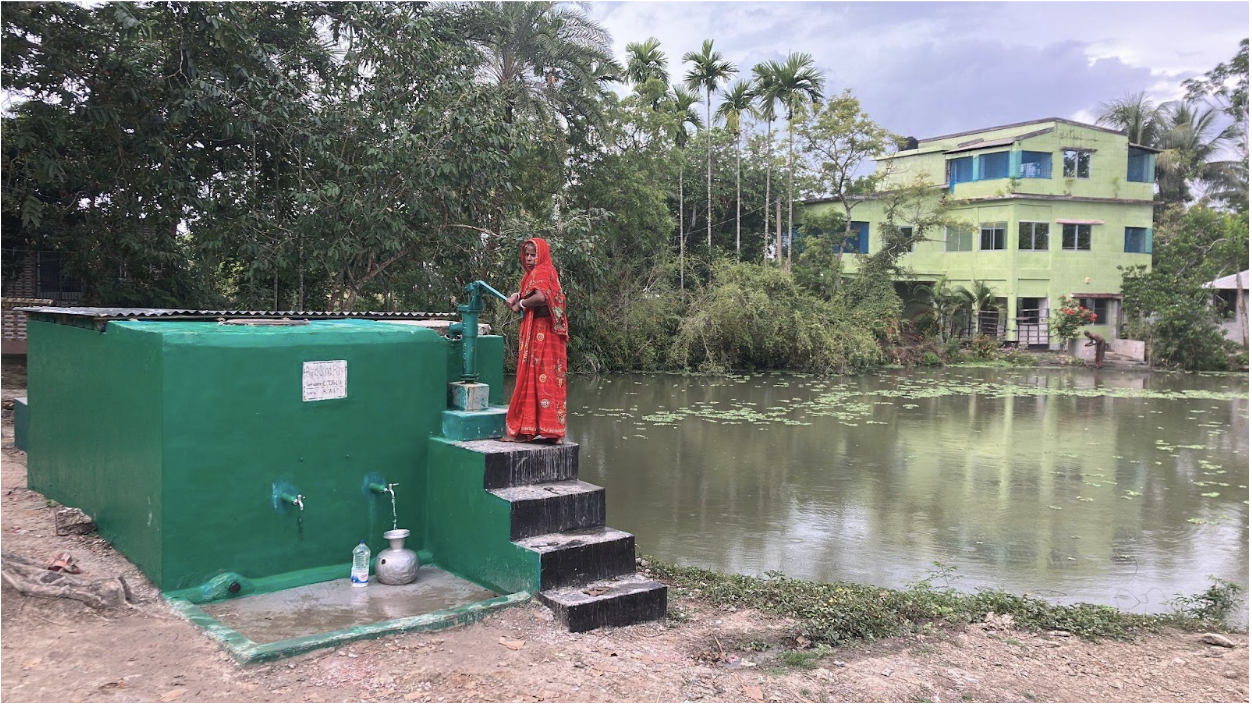
For a community that resides in one of the remote (prantik) regions of Bangladesh, the Munda community sees climate change—the changing salinity of the water, the shifts in heat, and the constant cyclones and floods—as integral to their story of survival. A 60-year-old woman remarked that "this land and water is what we are born into, and when it changes we suffer but can never leave it."
The Mundas' struggle is not an isolated case, as climate displacement has changed the lives of entire communities nearby. One kilometer away from Mundapara, one sees a cluster of houses in fading yellow stretching across a single line. On closer inspection, we learn from the locals that the homes - part of the government-funded Ashrayan Prokolpo scheme - were set up to house families devastated by Cyclone Aila in 2009. Many of these families lost their homes, which submerged under water with all their assets and income sources washed away. Housing 100 families in total, the women mentioned that many of them came from different communities—Muslim, Hindu, Munda, Jele, Mondol, and Rishi—highlighting the diversity in the small strip of landmass they call home. A 27-year-old birth midwife, when asked where her house is, pointed to the land on the other side of the river. "We came from the other side of the river. Our homes are gone."
When we expressed interest in interviewing some men, an elderly man told us to come in the evening as most of the men had departed for Dhaka. Due to a lack of jobs in the area and limited literacy among many of the residents, men migrate to city centers such as Dhaka and Khulna during the winter months from October to April, where they perform low-skilled labor in construction and masonry industries.
The Hidden Toll Behind Climate Change
Beyond immediate displacement and economic hardship, climate change has reshaped even the most intimate aspects of life in Shyamnagar. A common point of conversation is that child marriage remains prominent in the Satkhira district, accounting for 62 percent of girls who are married before the age of 18, of which 63 percent are found in Shyamnagar alone.
Elders in our conversations attribute this to environmental changes—some even claiming that increased salinity affects hormonal balances, causing young people to become sexually active earlier. "It is natural for these boys and girls to become 'ugro' (extreme) in their desires, and one of the fastest ways to deal with it is to get married as early as possible," a local female leader explained.
Whether grounded in science or folk belief, this explanation reveals how deeply communities interpret bodily changes through environmental shifts. Yet the changes in lifestyle brought upon by the seismic effects of climate vulnerability drive child marriage more directly: when livelihoods collapse and families face chronic insecurity, daughters can become financial burdens that early marriage temporarily alleviates. The result is the same with adolescents getting married before they have the chance to build alternative futures. The underlying struggles facing the communities in this area symbolize a more urgent need to engage with populations living where scant attention is paid to their health in a world beset by environmental disasters.
Healthcare facilities remain distant and often inaccessible. Robi, from earlier, shared with us that he struggles with constant rashes and itches on his body. When we asked him whether he had sought healthcare, he seemed uneasy. "There is little time for health when you have to help your father out with crabs."
His mother interrupted, blurting out, "Where would we go even if we wanted to?" This question was echoed not just from Robi and his mother, but from countless others whose bodies bear the marks of a changing climate—skin rashes, reproductive health issues, malnutrition—with nowhere to turn for care.
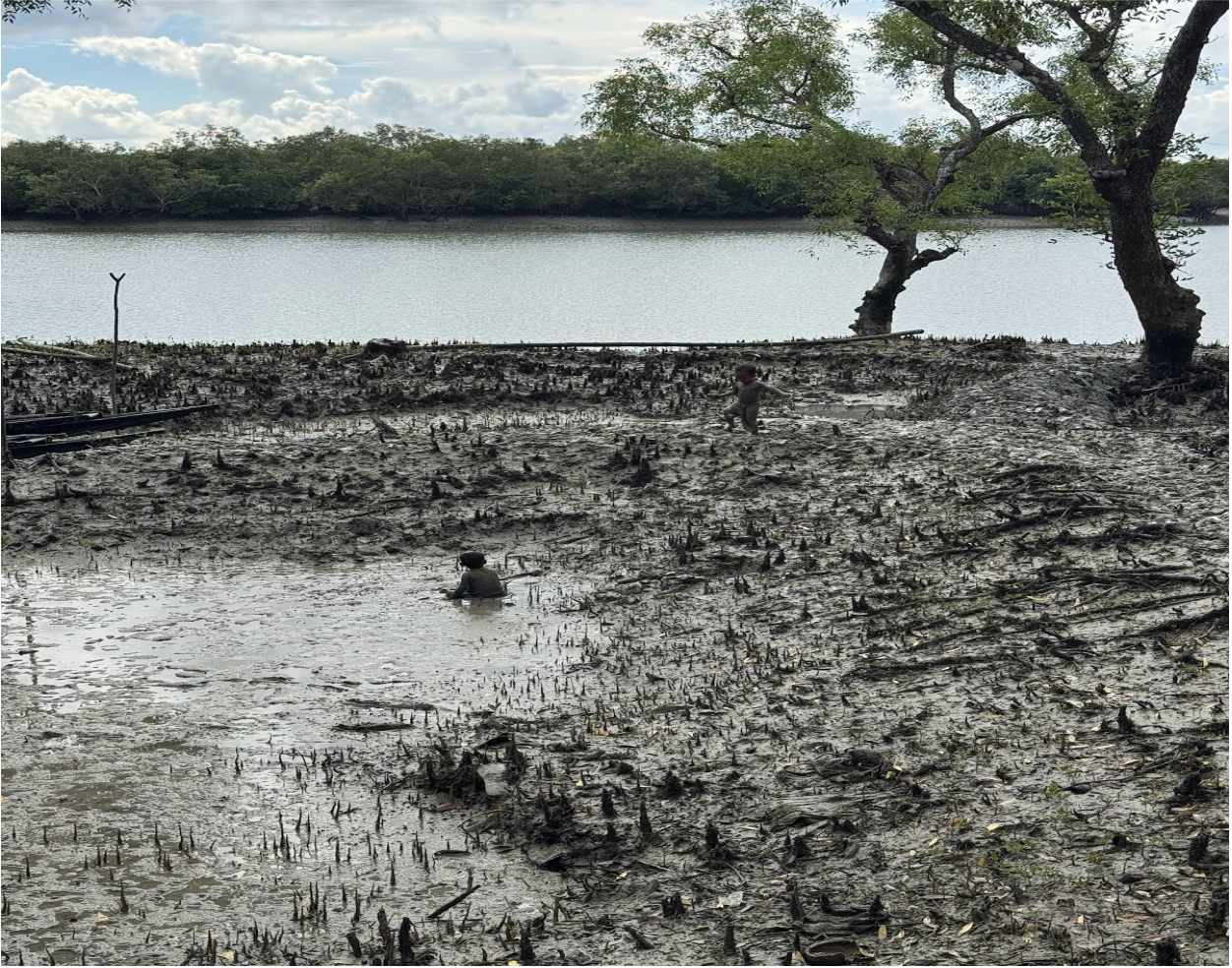
A young mother of two put it succinctly as we were leaving: “Amra bachte chai. Kintu poribesh amader shatru hoye jacche” (“We want to live. But nature is becoming our enemy”). Her voice, etched deeply into the silence of the riverbank, serves as an urgent reminder that climate vulnerability is merely a statistic on the ground; it is a fully lived experience, engorged on the skin, imprinted on the land, and embedded into the future of thousands.
Written by Israr Hasan and Md. Sajid Sultan Haque
Israr Hasan is a Research Associate at BRAC James P Grant School of Public Health, BRAC University specialising on gender, social movements, and climate justice.
Sajid Sultan Haque is a Research Associate at BRAC James P Grant School of Public Health, BRAC University specialising on topics such as gender and climate change.